
What Rockland County Property Tax Records Show
The relevant official source provides the current field or access detail.
| Field | What It Shows | Where |
|---|---|---|
| Assessed value | The relevant official source provides the current field or access detail. | The relevant official source provides the current field or access detail. |
| Market / appraised value | The relevant official source provides the current field or access detail. | The relevant official source provides the current field or access detail. |
| Exemptions | The relevant official source provides the current field or access detail. | The relevant official source provides the current field or access detail. |
| Tax bill & status | The relevant official source provides the current field or access detail. | The relevant official source provides the current field or access detail. |
| Taxing districts | The relevant official source provides the current field or access detail. | The relevant official source provides the current field or access detail. |
The relevant official source provides the current field or access detail.
Looking Up a Rockland County Tax Bill
The relevant official source provides the current field or access detail.
- Verify the result with the office that maintains the record.
- The relevant official source provides the current field or access detail.
- The relevant official source provides the current field or access detail.
- The relevant official source provides the current field or access detail.
- Assessed value
- The relevant official source provides the current field or access detail.
- Mill rate / levy
- The relevant official source provides the current field or access detail.
- Homestead exemption
- The relevant official source provides the current field or access detail.
- Tax lien
- The relevant official source provides the current field or access detail.
Appealing a Rockland County Assessment
The relevant official source provides the current field or access detail.
Appeal window. Rockland assessment grievances follow the current town calendar; missing the published filing date can delay review until a later cycle.
Separate the Rockland Tax Record Keepers
Rockland property tax records are split by task, not by one office. Town assessors build the assessment rolls and handle local exemptions. Town tax receivers collect current levies on their published schedules. County Finance takes over delinquency and any County tax proceeding. School tax collection can run on its own cycle. Start with the parcel's assessing town, the roll year, and the SBL. Then pick the collector and collection year that match the bill in hand.
| Record | Primary source | What it answers |
|---|---|---|
| Assessment roll | Town assessor | Owner, SBL, assessed value, exemptions |
| Current tax bill | Town receiver or listed collector | Levy, installments, payment status |
| Older payment history | Collector portal or office | Posted payments for available years |
| Delinquent County status | Rockland County Finance | Transferred arrears and County process |
Find the Correct Rockland Assessment Roll
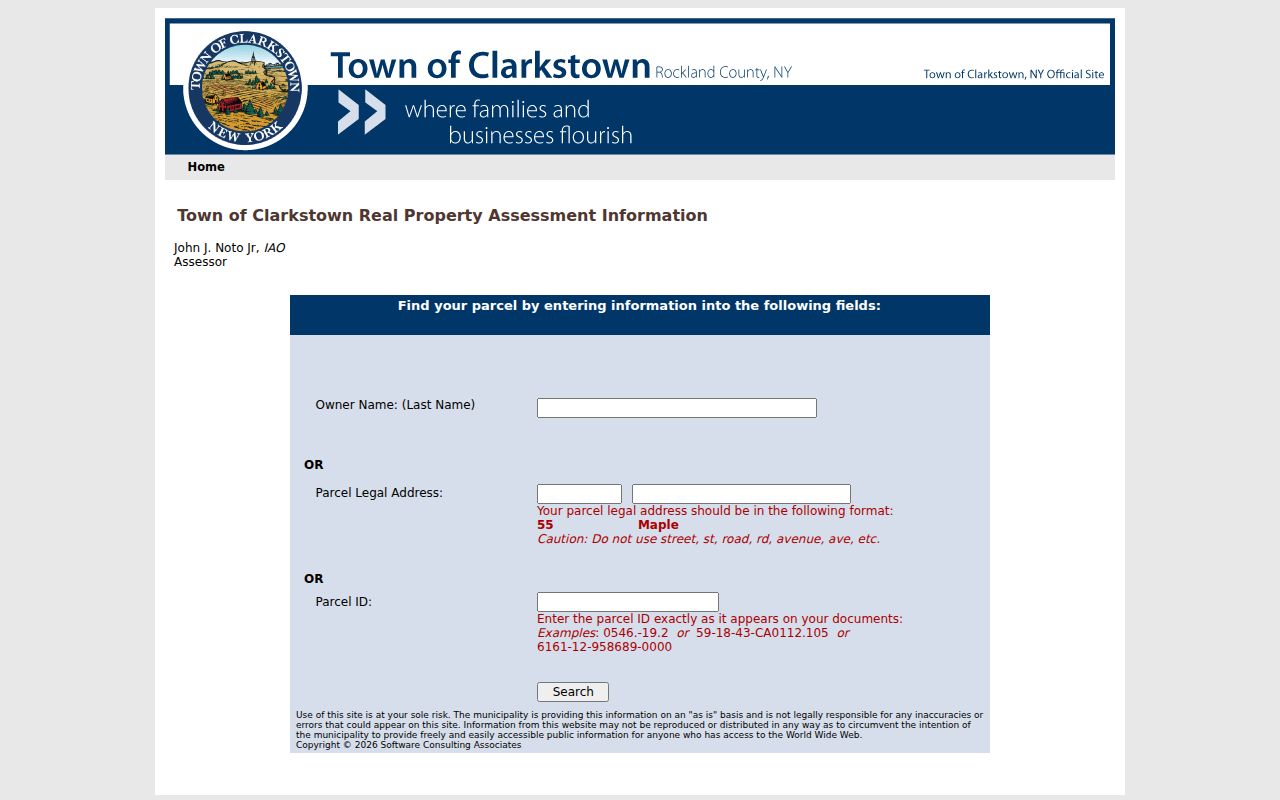
County and state municipal-data links identify the assessing town. The town is Clarkstown, Haverstraw, Orangetown, Ramapo, or Stony Point. Depending on the local system, a property search runs by address, owner, or parcel ID. Record the roll year, owner spelling, situs, SBL, SWIS, assessed value, and exemptions. Do this before moving on. Village and ZIP names can cross town lines, especially around Nyack, Spring Valley, and Pomona. Confirm the town in GIS. Clarkstown's search screen offers Owner Name, Parcel Legal Address, and Parcel ID fields. You can see them at the official assessment search.
Distinguish Assessed and Full-Market Figures
Assessed value is simply the roll value used inside New York's property-tax framework. Equalization rates help compare assessment levels across municipalities. A displayed full-market figure is a calculated estimate rather than an appraisal or guaranteed sale price. A Ramapo sample illustrates the gap. It shows $5,200 assessed, a 7.18 percent equalization rate, and $72,423 full-market value. Land and improvement components may also be listed separately. Read the labels and the year before comparing parcels.
Follow the Annual Assessment Calendar
New York's calendar is fairly fixed. March 1 is taxable-status day. A tentative roll generally posts May 1. Grievance review lands on the locally applicable fourth Tuesday in May. A final roll is generally filed July 1, though local notices control. Ramapo's 2026 owner toolkit linked the roll with a comparable-sales tool. It described a May grievance period plus an informal-review stretch from September through March. Gather the parcel record and comparable evidence early. Don't wait for a tax bill to arrive.
Review STAR and Other Exemptions
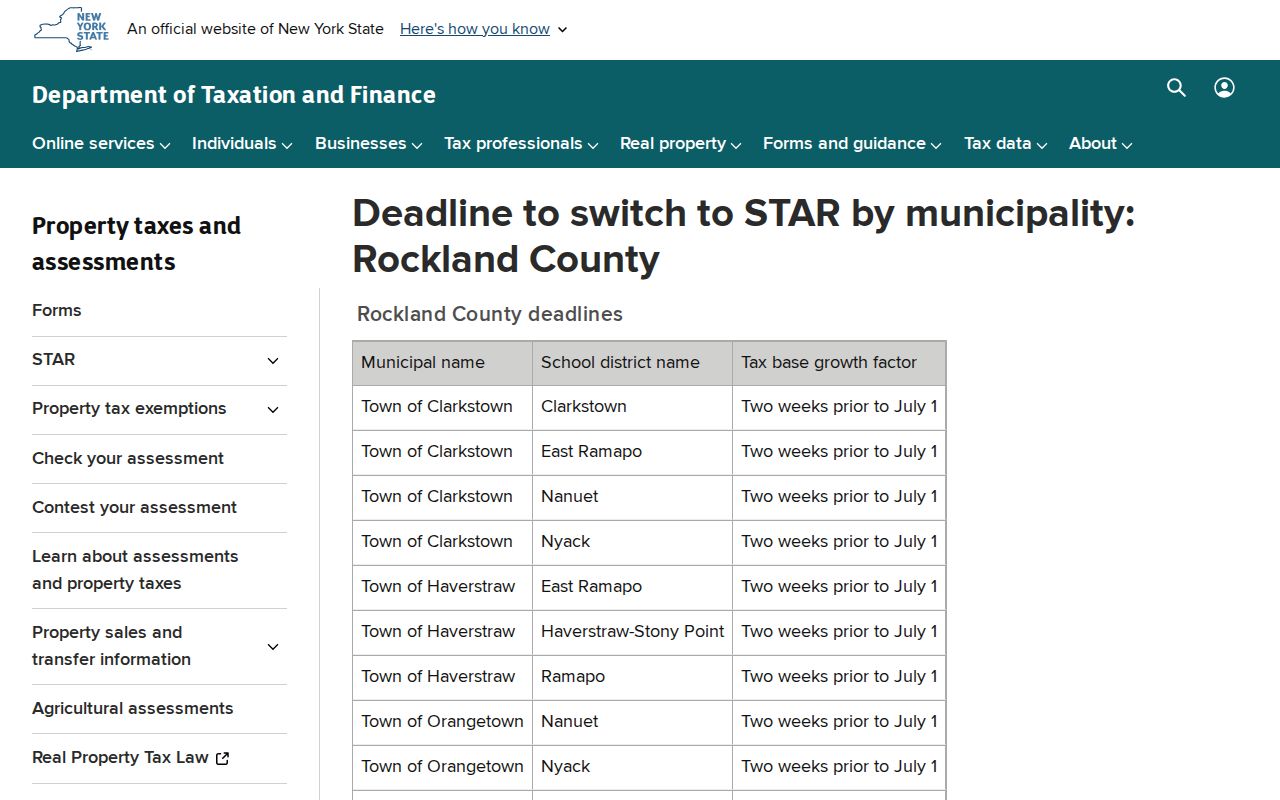
STAR, senior, veteran, disability, and other exemptions each carry different qualifications, administrators, and filing rules. An exemption can change taxable value without touching the underlying assessed value. One County Clerk office does not administer every exemption. The state Rockland page, updated March 27, 2026, lists municipality and school-district switch deadlines. Those deadlines underscore that split. Confirm the relevant assessor and state portal for the parcel's town and school district. The source table sits on New York's Rockland STAR deadline page.
Search Haverstraw Bills and Payment History
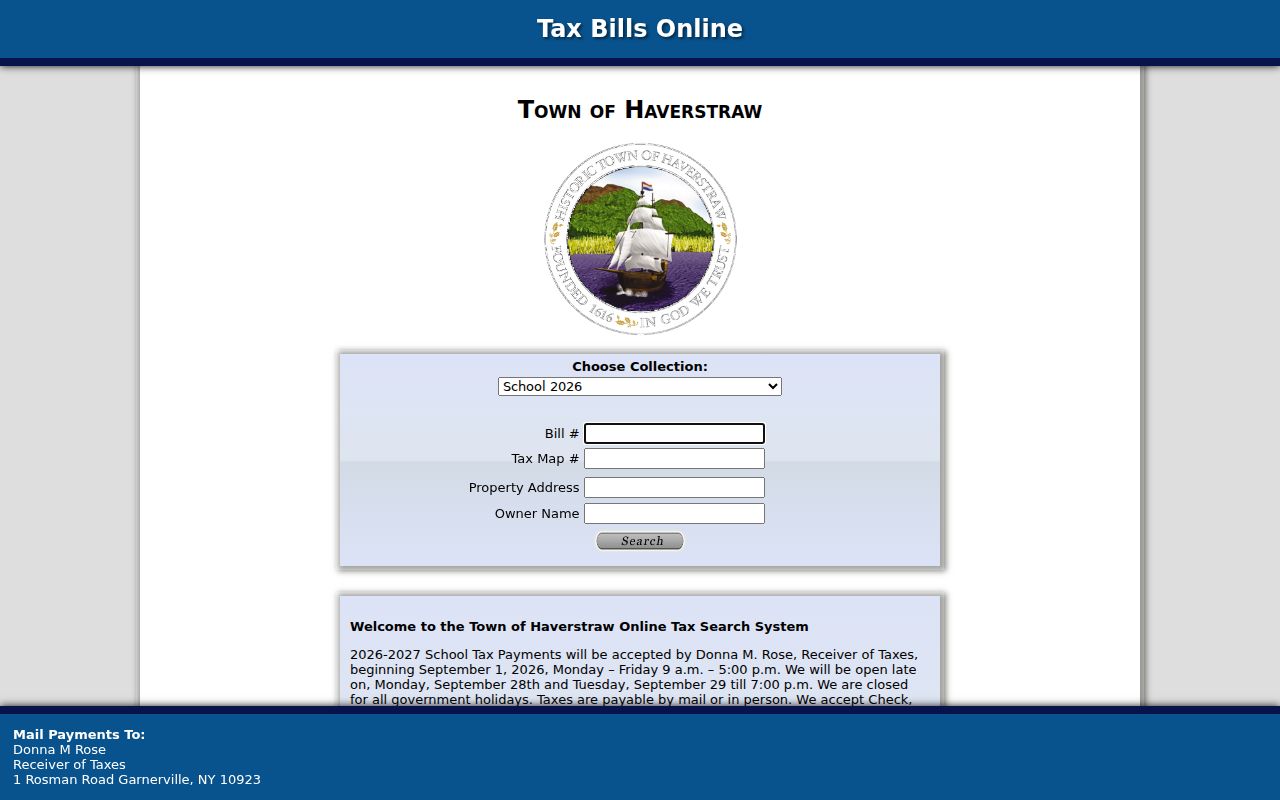
The Haverstraw BAS portal shows how a tax search works in practice. Pick the collection first. Then search by Bill Number, Tax Map Number, Property Address, or Owner Name. The site holds several years of payment history. Match the tax-map number to the assessor result. Note whether a displayed amount is an original levy, an installment, a penalty, a payment, or a remaining balance. A mailing address is not the property location. You can check the fields at the Town of Haverstraw tax portal.
Understand Delinquency and County Transfer
Local collection runs through March 31. Unpaid items transfer to the County beginning April 1. The transfer follows the described process. Penalties are governed by the applicable schedule. Always verify dates and amounts for the specific year. Once an item transfers, the town screen may no longer tell the whole story. Bring County Finance the SBL, owner, situs, bill year, and any receipt or confirmation number.
Research a Rockland Tax Auction
A County notice scheduled a March 12, 2026 public auction of County-owned tax-delinquent property. It was held at the Allison-Parris County Office Building in New City. Registration opened at 6:15 p.m., and photo identification was required. Bidders owing delinquent taxes were excluded. The County had acquired the parcels through tax-lien sales after redemption expired. Auction availability and terms are event-specific. Read the complete current notice. Inspect the title and parcel record. Never reuse old dates as current instructions.
Contest an Assessment, Not the Tax Rate
A grievance challenges the assessment itself. It does not appeal an adopted tax rate or erase a valid levy. Build the case with the assessor's parcel facts, sales evidence, and the current grievance form. Informal review helps where offered. It never extends a statutory filing deadline. Keep the final determination with later bills. It explains changes between roll years.
Calendar control. Confirm the current tentative-roll and grievance dates with the town assessor; missing the filing window can postpone review.
Preserve Proof of a Rockland Tax Payment
After paying, keep the confirmation, bill number, parcel number, collection year, amount, and posting date. Reopen the official portal once processing clears. Verify the payment landed on the intended parcel. If a mortgage servicer pays through escrow, compare its disbursement with the collector's record. Do not treat the loan statement as the tax receipt. Direct posting questions to the collector responsible for that levy.
A paid status settles nothing else. It does not resolve ownership, assessment accuracy, or later charges. An assessment-roll owner is not proof that the named person paid the bill, either. Keep tax evidence separate from the deed chain and use the SBL to join them. That distinction matters when researching a sale, an estate, a delinquency, or a parcel with a recent address change.
Correct a Tax Mailing Address at Its Source
Tax bills go astray when the assessor's owner-and-mailing record carries stale information. Each town in Rockland County handles these corrections through its own stated process. Submit the change in writing. Identify the parcel by its SBL rather than by street address alone. Once the update is in, check with the tax collector. Later bills should then carry the new address.
Keep your written confirmation on file. A mailing correction never transfers title. It does not alter the situs or substitute for recording a deed. Updates can also lag between county and town systems.